In the vast ecosystem of logistics and supply chain management, much attention is given to temperature-controlled environments like chilled and frozen storage. However, the vast majority of goods traded globally—approximately 80% by volume—require neither refrigeration nor freezing. These products, ranging from canned foods and dry goods to construction materials, textiles, electronics, and pharmaceuticals that are stable at room temperature, rely on a different but equally critical solution: Ambient Storage. Ambient storage refers to warehousing facilities that maintain natural, uncontrolled indoor temperatures that reflect the external climate, typically ranging from 15°C to 30°C, with relative humidity between 30% and 65%. Unlike cold storage, ambient facilities do not actively cool or heat the space, but they do provide essential protections: shelter from rain and direct sunlight, ventilation to prevent condensation, pest control measures, and structural integrity to prevent water ingress. While the concept sounds simple, professional ambient storage is far from a basic shed. It involves careful site selection, building orientation to minimize solar gain, proper racking systems for maximum space utilization, and inventory management technologies that track thousands of SKUs in real time. For businesses operating in Saudi Arabia, where summer temperatures exceed 45°C and dust storms are common, ambient storage takes on unique challenges and requires specialized design considerations. This comprehensive guide explores the fundamentals of ambient storage, the specific demands of Riyadh and the broader Kingdom, and why choosing the right partner is essential for operational success.
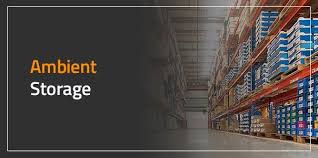
Ambient Storage
Understanding Ambient Storage begins with recognizing what it is not. It is not refrigerated, not frozen, and not climate-controlled in the active sense. Instead, ambient storage leverages the natural environment while mitigating its risks. A well-designed ambient storage facility protects goods from four primary threats: solar radiation, moisture intrusion, pest infestation, and airborne contaminants. For most dry goods—paper products, canned foods, bottled beverages, cleaning supplies, hardware, automotive parts, and textiles—these protections are sufficient to maintain product integrity for months or years. However, not all ambient conditions are equal. The pharmaceutical industry, for example, defines “ambient” storage as temperatures between 15°C and 25°C for many products, with narrow humidity ranges. This is technically “controlled room temperature” (CRT) rather than true ambient. For true ambient storage, where no active HVAC systems operate, the facility’s design becomes critical. Key elements include high roofs with reflective coatings to reduce heat buildup, insulated wall panels to slow temperature swings, strategic placement of ventilation louvers to promote natural airflow, and elevated flooring to prevent ground moisture wicking. Racking systems must be designed for the specific products stored—pallet racking for heavy items, cantilever racking for long materials like pipes, and shelving for small, fast-moving consumer goods.
Another crucial aspect of ambient storage is humidity management. While no active dehumidification occurs, passive measures like vapor barriers in floors and walls, proper drainage around the building perimeter, and avoiding water sources within the storage area are essential. In humid coastal regions, ambient storage facilities often incorporate passive desiccants or ventilation timing to avoid peak humidity hours. Fire safety is another priority. Unlike cold storage, where low temperatures naturally suppress fire, ambient facilities require comprehensive sprinkler systems, smoke detection, and fire-rated construction. Insurance requirements for ambient storage are substantial, and facilities must comply with local civil defense codes. Inventory management in ambient storage has also evolved dramatically. Modern facilities use warehouse management systems (WMS) with barcode or RFID tracking, enabling real-time visibility of stock levels, locations, and movement history. For businesses holding thousands of SKUs, this technology transforms ambient storage from a passive holding area into an active logistics hub that supports just-in-time delivery, cross-docking, and e-commerce fulfillment. Ultimately, professional ambient storage is not about doing nothing to the environment—it is about designing a space that works with nature rather than fighting it, creating predictable, safe conditions for non-perishable goods at a fraction of the cost of temperature-controlled alternatives.
Ambient Storage in Riyadh
The capital city of Saudi Arabia presents a distinctive set of conditions that make Ambient Storage in Riyadh uniquely challenging. Riyadh sits on a high desert plateau, experiencing scorching summers with temperatures regularly exceeding 45°C and occasionally reaching 50°C. Nighttime temperatures can drop by 15–20°C, creating significant thermal swings. Relative humidity is typically low, often below 20% during summer afternoons, but occasional influxes of humid air from the east can raise levels temporarily. Dust is a persistent issue, with fine particulate matter carried by wind from the surrounding Empty Quarter desert. These conditions mean that a standard metal warehouse—common in Europe or North America—would become an oven in Riyadh’s summer, with internal temperatures potentially exceeding 55°C, rendering it unsuitable for any temperature-sensitive ambient goods. Therefore, ambient storage in Riyadh requires deliberate engineering. Roofing materials must have high solar reflectance index (SRI) values, often achieved through white thermoplastic polyolefin (TPO) membranes or cool-roof coatings. Insulation is non-negotiable; modern facilities use at least 75mm to 100mm of closed-cell polyurethane spray foam or rigid insulation boards to slow heat transfer. Ventilation systems, while not actively cooling, must provide adequate air changes per hour—typically 4 to 6 air changes—to prevent heat stratification and remove any accumulated fumes or odors.
Another critical consideration for Ambient Storage in Riyadh is dust filtration. Unlike humid regions where moisture is the enemy, Riyadh’s ambient storage facilities must protect against airborne dust that can settle on products, clog electronic components, and contaminate food packaging. Facilities are increasingly installing passive dust filters on ventilation intakes, using pleated panel filters with MERV 8 ratings or higher. Some premium facilities even incorporate positive air pressure systems, where slightly more air is forced in than exhausted, preventing unfiltered outside air from seeping through cracks and door seals. The orientation of the building on its site also matters. The ideal ambient storage facility in Riyadh has its longest axis running east-west, minimizing the surface area exposed to the intense afternoon sun on the west-facing wall. Loading docks are positioned on the north or east sides where solar gain is lower, and dock shelters or seals prevent dust entry during truck loading.
The demand for Ambient Storage in Riyadh is driven by the city’s role as the Kingdom’s commercial and logistics capital. Riyadh is home to over 7 million people, with massive distribution centers serving supermarket chains, e-commerce platforms, construction material suppliers, and automotive parts distributors. Major retail groups like BinDawood, Danube, and Lulu operate regional distribution centers in Riyadh, requiring ambient storage for everything from canned goods to household cleaning products. The city’s industrial zones, including the Riyadh Second Industrial City and Sudair Industrial City, host manufacturers of furniture, plastics, building materials, and packaged foods—all needing ambient storage for raw materials and finished goods. Additionally, with the growth of online retail, ambient storage facilities are increasingly being adapted for e-commerce fulfillment, incorporating mezzanines, pick-and-pack zones, and conveyor systems. For businesses seeking ambient storage in Riyadh, the key considerations are location (proximity to major highways like King Fahd Road, Eastern Ring Road, and Makkah Road), building quality (insulation, roofing, dust protection), and technology (WMS integration, security, fire safety). Choosing a provider who understands these local nuances is not just advisable—it is essential for protecting your inventory and maintaining operational efficiency.
Ambient Storage in Saudi Arabia
Expanding our perspective to the national level, the landscape of Ambient Storage in Saudi Arabia reflects the Kingdom’s vast geography, diverse climate zones, and ambitious economic transformation under Vision 2030. Saudi Arabia is not a monolith when it comes to ambient storage requirements. The western region along the Red Sea, including Jeddah, Makkah, and Yanbu, experiences high humidity year-round, with coastal fog and occasional rainfall. Ambient storage facilities here must prioritize moisture protection—elevated floors, vapor barriers, corrosion-resistant racking, and active ventilation during humid periods. Conversely, the eastern region including Dammam, Khobar, and Jubail faces a hybrid challenge: high summer temperatures similar to Riyadh but with periodic Gulf humidity and salt-laden air from the nearby sea. Corrosion protection for metal structures and racking is critical. The southern region, including Abha, Khamis Mushait, and Najran, enjoys milder temperatures due to higher elevations, but experiences seasonal rainfall that requires robust roof drainage and flood prevention measures.
The demand for Ambient Storage in Saudi Arabia is being shaped by several powerful trends. First, the rapid expansion of the retail sector, with international brands entering the Saudi market and local players consolidating, has created unprecedented demand for modern warehousing. Grocery retail alone is a $60 billion market, with ambient goods representing the majority of shelf space. Second, the construction boom fueled by giga-projects like NEOM, the Red Sea Project, Qiddiya, and ROSHN has driven demand for ambient storage of building materials—cement, steel, pipes, tiles, windows, and fixtures. These materials require large, secure, dry spaces with heavy-duty racking and easy access for flatbed trucks. Third, the growth of e-commerce and last-mile delivery has transformed ambient storage requirements. Companies like Amazon Saudi Arabia, Noon, and local players need distributed ambient storage nodes near urban centers to enable same-day or next-day delivery. This has led to the development of smaller “urban warehouses” within city limits, often repurposed industrial buildings upgraded with modern security and inventory systems.
Fourth, the pharmaceutical and medical device sector, while primarily requiring cold chain, also needs significant ambient storage for products stable at room temperature—bandages, syringes, pill bottles, medical equipment, and packaging materials. The Saudi Food and Drug Authority (SFDA) imposes good storage and distribution practices (GSDP) requirements for pharmaceutical ambient storage, including temperature monitoring, cleanliness standards, and document control. Fifth, the agricultural sector, particularly date farming and processing, requires ambient storage for dried dates and packaging materials. Saudi Arabia is one of the world’s largest date producers, with hundreds of thousands of tons requiring proper storage before export.
Another critical development is the government’s focus on logistics infrastructure. The National Industrial Development and Logistics Program (NIDLP) aims to position Saudi Arabia as a global logistics hub. This includes the development of integrated logistics zones at ports and airports, with bonded ambient storage allowing duty-deferred handling of imported goods. The Saudi Authority for Industrial Cities and Technology Zones (MODON) operates over 35 industrial cities across the Kingdom, many offering ambient storage units for lease to manufacturers and distributors. The ambient storage market in Saudi Arabia is projected to grow at 6–8% annually through 2030, driven by population growth (projected to reach 40 million), retail expansion, e-commerce penetration, and industrialization. For businesses operating in this dynamic environment, selecting an ambient storage partner with national reach, local expertise, and modern infrastructure is critical. The provider must understand that ambient storage in Dammam is not the same as ambient storage in Abha, and that a one-size-fits-all approach leads to product damage, operational inefficiency, and lost revenue.
Units: Your Trusted Partner for Ambient Storage Across the Kingdom
When your business requires ambient storage that is secure, accessible, efficient, and tailored to Saudi conditions, one name consistently rises to the top: Units. As the Kingdom’s premier provider of storage solutions, Units has established itself as the top company for ambient storage across Riyadh, Jeddah, Dammam, and beyond. With years of operational experience and a client roster that includes leading retailers, manufacturers, distributors, and e-commerce platforms, Units delivers the reliability and professionalism that modern businesses demand.
Unlike generic warehouse operators who simply rent empty space, Units designs its ambient storage facilities from the ground up for Saudi Arabia’s unique environment. Our buildings feature cool-roof technology with high-albedo coatings that reflect up to 85% of solar radiation, reducing internal temperatures by 8–12°C compared to standard metal warehouses. Insulated sandwich panels with polyurethane cores (minimum 80mm thickness) line all external walls and roofs, slowing heat transfer and reducing temperature swings between day and night. Strategic placement of ridge vents, turbo extractors, and louvered wall vents provides natural airflow without the energy costs of mechanical ventilation, while dust filters on all intake points keep your products clean.
Location is everything in logistics, and Units has secured prime positions across the Kingdom. Our Riyadh ambient storage facility is strategically located near the intersection of King Fahd Road and the Eastern Ring Road, providing rapid access to all parts of the capital and easy connections to Highway 65 leading north to Qassim and south to Kharj. Our Jeddah facility sits close to King Abdulaziz Port and the Haramain High-Speed Railway station, ideal for importers and distributors serving Makkah and Madinah. Our Dammam facility offers proximity to King Abdulaziz Port (Dammam) and the Gulf Bridge connecting to Bahrain, serving the eastern province’s industrial heartland.
Inside our facilities, you will find professional-grade infrastructure designed for operational efficiency. Heavy-duty pallet racking systems accommodate standard GCC pallets (1200mm x 1000mm) and custom sizes. Aisle widths from 3 to 4 meters allow easy maneuvering of counterbalance and reach forklifts. LED lighting with motion sensors reduces energy costs while providing excellent visibility. Fire safety systems include wet sprinklers, smoke detectors, and fire extinguishers at every aisle end, all maintained to civil defense standards. Security is comprehensive: 24/7 CCTV coverage with 90-day retention, biometric access control limiting entry to authorized personnel, and perimeter fencing with intrusion detection.
What truly sets Units apart is our technology platform and client service. Every ambient storage client receives access to our cloud-based warehouse management system (WMS), allowing you to view inventory levels, locate specific pallets or cartons, receive low-stock alerts, and generate pick lists—all from your office or mobile device. We support barcode scanning, RFID, and manual entry methods, integrating with your existing ERP or accounting software through API connectivity. Our dedicated client service team provides monthly statements, photos of stored goods upon request, and flexible reporting for audit purposes.
Units offers flexible contract terms ranging from month-to-month for seasonal overflow storage to multi-year exclusive arrangements for high-volume clients. Whether you need 50 square meters of space for e-commerce inventory or 20,000 square meters for a national distribution center, Units scales to meet your needs. Value-added services include pick-and-pack, labeling, quality inspection, inventory counting, and coordination with last-mile delivery providers. Our multilingual team speaks Arabic, English, Urdu, and Tagalog, ensuring clear communication regardless of your workforce composition.
Don’t trust your non-perishable inventory to substandard facilities that expose products to extreme heat, dust, or theft. Partner with Units—the name that businesses across Saudi Arabia trust for ambient storage excellence. Visit our website at units.sa to schedule a facility tour, request a customized quote, or speak directly with one of our ambient storage specialists. With Units, your ambient goods are stored safely, organized intelligently, and accessible whenever you need them.
Conclusion
Ambient storage may lack the technological glamour of cold chain logistics, but its importance to the Saudi economy cannot be overstated. Ambient Storage provides the foundation upon which retail, manufacturing, construction, e-commerce, and countless other sectors operate. Without safe, accessible, and affordable ambient storage, supply chains would grind to a halt, and consumers would face empty shelves and delayed deliveries. In Ambient Storage in Riyadh, the extreme desert climate, massive population, and role as the national commercial hub demand facilities that are engineered specifically for local conditions—cool roofs, insulation, dust filtration, and strategic location. Across Ambient Storage in Saudi Arabia, the diversity of climate zones from Jeddah’s humidity to Abha’s mildness requires a sophisticated, regionally adapted approach rather than a one-size-fits-all solution. The rapid growth of retail, construction, e-commerce, and logistics under Vision 2030 is driving unprecedented demand for modern ambient storage, creating opportunities for businesses that get it right and risks for those that cut corners. That is why leading companies across the Kingdom choose Units as their trusted partner. With strategically located facilities, professional-grade infrastructure, advanced technology, and an unwavering commitment to client success, Units delivers the ambient storage solution your business deserves. Do not let inadequate warehousing compromise your inventory, your operations, or your reputation. Visit units.sa today and discover the Units difference—where ambient storage meets excellence.
Frequently Asked Questions (FAQs)
1. What products are suitable for ambient storage?
Ambient storage is ideal for products that do not require temperature control to remain stable and safe. This includes canned and jarred foods, dry goods (rice, pasta, flour, sugar), bottled beverages, paper products, cleaning supplies, personal care items, textiles and clothing, hardware and tools, automotive parts, furniture, construction materials, and many pharmaceuticals that are stable at room temperature (check specific product labeling). If a product label specifies storage below 25°C or 30°C, ambient storage may still be acceptable provided the facility maintains those conditions passively.
2. How does Units protect products from Riyadh’s extreme summer heat?
Units’ ambient storage facilities in Riyadh incorporate several heat mitigation strategies. Our roofs use high-albedo cool-roof coatings that reflect 85% of solar radiation rather than absorbing it. Insulated sandwich panels (80mm+ polyurethane core) line all walls and roofs, slowing heat transfer significantly. Strategic ventilation with ridge vents and turbo extractors allows hot air to escape naturally. We also orient building loading docks to the north or east to minimize direct sun exposure during door openings. These measures typically keep internal temperatures 10–15°C below external ambient temperatures without active cooling.
3. Can Units handle hazardous materials in ambient storage?
Units complies with all Saudi Civil Defense and environmental regulations regarding hazardous materials. We can store certain classes of hazardous goods (e.g., paints, solvents, certain chemicals, batteries) in designated, segregated areas with appropriate spill containment, ventilation, fire suppression, and signage. Clients must provide Safety Data Sheets (SDS) and declare all hazardous materials before storage. Contact our team to discuss specific hazard classes and requirements.
4. Does Units offer ambient storage for short-term needs like seasonal overflow?
Absolutely. Units understands that many businesses experience seasonal fluctuations in inventory—before Ramadan, during back-to-school season, or ahead of major sales events like White Friday. We offer flexible month-to-month contracts with no long-term commitment required. You can scale space up or down with 30 days’ notice, paying only for the space you actually use. This is ideal for e-commerce sellers, seasonal importers, and businesses managing promotional inventory.
5. How do I access my products stored at Units?
Units provides scheduled and, in some cases, on-demand access to your stored goods. Our standard operating hours are Saturday through Thursday (8:00 AM to 8:00 PM), with after-hours access available by prior arrangement. You can request that our team pick specific items from your inventory and prepare them for pickup or delivery using our WMS portal. Alternatively, you can send your own staff with authorized identification to access your dedicated storage area under supervision. All access is logged, and CCTV footage is retained for security.