
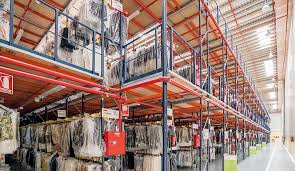
In the fast-paced world of commerce, storage is not a one-size-fits-all proposition. A restaurant managing fresh ingredients has vastly different requirements than a wholesaler storing pallets of dry goods, and those needs bear little resemblance to an electronics retailer safeguarding sensitive smart devices. Each industry faces unique challenges: temperature sensitivity, turnover rates, security risks, and regulatory compliance. Generic warehousing often falls short, leading to spoiled food, damaged products, and lost revenue. This comprehensive guide explores the specialized storage needs of three critical sectors—restaurants, wholesalers and retailers, and electronics businesses—and demonstrates why partnering with the right storage provider transforms operational efficiency. Whether you are a restaurant owner in Riyadh struggling with limited back-of-house space, a wholesale distributor managing hundreds of SKUs, or an electronics retailer protecting high-value inventory, professional storage solutions tailored to your industry are not a luxury—they are a competitive necessity.
Storage for Restaurants
The restaurant industry is one of the most demanding environments for storage. Unlike retail businesses that can hold inventory for weeks or months, restaurants operate on razor-thin margins where freshness is paramount, space is at a premium, and supply chains must be reliable. Storage for Restaurants requires a multi-temperature approach that accommodates everything from frozen meats and chilled produce to dry goods like rice, flour, and canned products, plus non-food items such as cleaning supplies, paper goods, and spare equipment. A typical restaurant uses three distinct storage zones: frozen storage (-18°C to -25°C) for meats, seafood, and ice cream; chilled storage (+1°C to +5°C) for dairy, fresh vegetables, and prepared items; and ambient storage (15°C to 25°C) for dry ingredients, beverages, and supplies. Managing these zones within the limited square footage of a restaurant kitchen is nearly impossible, especially for high-volume establishments or those in dense urban areas where real estate costs are prohibitive.
Off-site professional storage for restaurants has emerged as a transformative solution. Instead of cramming walk-in freezers and dry storage racks into expensive commercial kitchen space, restaurants can store the bulk of their inventory at a dedicated facility, keeping only 2–3 days of stock on premises. This approach frees up valuable kitchen real estate for food preparation and customer seating. But not all storage providers understand the unique rhythm of restaurant operations. Restaurants receive deliveries daily, sometimes multiple times per day, and need storage that supports frequent, small-batch withdrawals—not just pallet-in, pallet-out movements. The ideal storage for restaurants offers “pick and pack” services where staff can pull specific cases or even individual items from your stored inventory and prepare them for daily delivery to your location. This reduces the burden on restaurant managers and ensures that you never run out of key ingredients.
Another critical factor is traceability and food safety compliance. In Saudi Arabia, the Saudi Food and Drug Authority (SFDA) requires restaurants to maintain records of food storage temperatures, receiving logs, and stock rotation (FIFO – first in, first out). A professional storage provider for restaurants should offer digital temperature monitoring with audit trails, expiration date tracking, and automated alerts when products approach their use-by dates. This protects your restaurant from serving spoiled food, which can lead to customer illness, negative reviews, regulatory fines, and even license suspension.
Seasonality is another consideration. During Ramadan, restaurant demand surges dramatically, with many establishments operating at double or triple normal volume. Storage needs spike accordingly. Similarly, during summer months, frozen and chilled storage demand increases while ambient storage for dry goods may remain stable. Professional storage providers serving restaurants offer flexible contracts that allow you to scale space up during peak seasons and down during slower periods without penalty. They also understand the unique requirements of different restaurant types. A fast-food chain needs high-volume frozen storage for pre-portioned items. A fine-dining establishment requires specialized chilled storage for delicate produce and fresh seafood. A bakery needs ambient storage with controlled humidity for flour and sugar. A catering company handling weddings and corporate events needs flexible storage that accommodates fluctuating inventory based on event schedules.
By partnering with a storage provider that specializes in restaurant needs, you gain operational efficiency, regulatory peace of mind, and the ability to focus on what matters most: preparing exceptional food and delivering outstanding customer experiences. The right provider acts as an extension of your kitchen, handling the logistics so you can handle the cooking.
Storage for Wholesalers and Retailers
Wholesalers and retailers form the backbone of the Saudi economy, moving millions of products from manufacturers to consumers every day. For these businesses, Storage for Wholesalers and Retailers is not simply about holding inventory—it is about enabling rapid turnover, efficient order fulfillment, and cost-effective distribution. Wholesalers typically handle large volumes of homogeneous products, storing pallets of identical items that will be distributed to multiple retailers or business customers. Retailers, whether brick-and-mortar stores or e-commerce platforms, require more granular storage with the ability to pick individual units or small cases for customer orders. Both share common needs: high-density storage, efficient inventory management, and reliable access.
Wholesalers face the challenge of balancing bulk purchasing discounts against storage costs. Buying a full truckload of a product lowers per-unit cost but requires significant storage space. The ideal storage for wholesalers offers scalable space with pallet racking systems that maximize vertical storage, allowing you to store hundreds or thousands of pallets in a relatively small footprint. Drive-in racking, push-back racking, and pallet flow systems are common solutions that increase density while maintaining accessibility. Additionally, wholesalers need cross-docking capabilities—the ability to receive goods from one truck and immediately load them onto another for outbound delivery without intermediate storage. This reduces handling costs and transit times, improving overall supply chain efficiency.
Retailers, particularly those with multiple store locations, need storage that functions as a centralized distribution hub. A typical retail chain receives container loads of products at a central warehouse, then distributes smaller quantities to individual stores based on their specific sales patterns. This requires zone picking, where the warehouse is organized into product categories (e.g., dry grocery, household chemicals, personal care), and order fulfillment staff pick items from multiple zones to complete store orders. Modern storage for retailers incorporates warehouse management systems (WMS) that guide pickers to the correct locations via handheld scanners or voice-directed picking, dramatically reducing errors and increasing speed. For e-commerce retailers, storage needs are even more demanding. Online orders often consist of single items or small quantities, requiring “each picking” rather than case or pallet picking. This necessitates shelving systems, bin storage, and packing stations within the same facility. Some e-commerce operations even implement automated storage and retrieval systems (AS/RS) where robots retrieve bins of products and deliver them to human pickers, increasing efficiency by 300–400% compared to manual methods.
Another critical consideration for wholesalers and retailers is inventory accuracy. Stockouts (running out of a product) cost retailers an estimated $1 trillion globally each year in lost sales. Conversely, overstocking ties up capital and increases storage costs. Professional storage providers offer real-time inventory visibility through integrated WMS platforms. You can log in from anywhere to see exactly how many units of each SKU you have, where they are located, how long they have been in storage, and when more are arriving. Cycle counting—regularly counting small portions of inventory rather than shutting down for a full physical count—maintains accuracy without disrupting operations.
Seasonal fluctuations are a major factor for both wholesalers and retailers. Back-to-school season, Black Friday, Ramadan, and year-end holidays all create dramatic demand spikes. Storage providers serving these sectors offer surge capacity, allowing you to rent additional space during peak periods and release it afterward. Some providers also offer “storage in transit” arrangements where goods are held at the warehouse temporarily before being shipped directly to stores or customers, reducing double handling. For wholesalers and retailers looking to scale efficiently, professional storage is a strategic asset that reduces costs, improves customer satisfaction, and enables faster growth.
Storage for Electronics & Smart Devices
The electronics industry presents one of the most demanding storage environments of any sector. Smartphones, laptops, tablets, smartwatches, televisions, gaming consoles, and their accessories are high-value, sensitive products that require protection from physical damage, electrostatic discharge (ESD), temperature extremes, humidity, and theft. Storage for Electronics & Smart Devices goes far beyond standard warehousing—it demands specialized infrastructure, handling protocols, and security measures. A single mishandled pallet of smartphones can represent hundreds of thousands of riyals in damage. Accordingly, businesses that buy, sell, or distribute electronics must treat storage with the seriousness it deserves.
Physical protection is the most obvious requirement. Electronics are fragile. A drop of just a few feet can crack screens, damage internal components, or render a device inoperable. Professional storage for electronics uses padded racking, foam-lined bins, and careful stacking height limits to prevent crushing. Products are stored in their original packaging as long as possible, as manufacturer packaging is designed to absorb shock during transport. When products must be removed from packaging for inspection or repackaging, specialized handling stations with anti-static mats and padded surfaces are essential. Storage providers should train all staff who handle electronics on proper lifting, carrying, and stacking techniques to prevent accidental damage.
Electrostatic discharge (ESD) is a hidden but serious threat. Electronics contain sensitive microchips that can be damaged or destroyed by static electricity generated by walking across a carpet, removing a product from plastic wrap, or even normal warehouse activity. ESD damage may not be immediately apparent—a device might work initially but fail prematurely due to latent damage. Professional storage for electronics incorporates ESD-protected zones with conductive flooring, anti-static workstations, grounding wrist straps for staff, and humidity control (dry air increases static risk). Packaging materials in these zones are static-dissipative rather than standard plastic.
Environmental conditions also matter. While electronics are not as temperature-sensitive as food, extreme heat can degrade batteries, damage LCD screens, and soften adhesives. Extreme cold can make plastic components brittle. High humidity causes corrosion on metal contacts and circuit boards. Low humidity increases ESD risk. Professional electronics storage maintains temperatures between 15°C and 25°C, and relative humidity between 40% and 60%. This is often achieved through ambient storage with passive environmental controls rather than full refrigeration, but monitoring is essential. Temperature and humidity data loggers should record conditions continuously, with alerts triggered if parameters exceed acceptable ranges. For products containing lithium-ion batteries—which includes almost all modern smart devices—additional safety measures are required. Batteries can experience thermal runaway if stored in high temperatures or if damaged. Storage areas for battery-containing devices must have fire suppression systems rated for electrical fires (Class C) and proper ventilation to disperse any gases released by failing batteries.
Security is paramount for electronics storage given the high value and small size of many products. A single carton of smartphones can be worth over $100,000. Professional electronics storage facilities implement layered security: perimeter fencing with intrusion detection, 24/7 CCTV coverage with high-resolution cameras and 90-day retention, biometric access control limiting entry to authorized personnel, and motion sensors in storage areas. Some facilities also employ RFID tagging of high-value individual items, enabling real-time location tracking and tamper alerts. Client-specific cage areas or locked rooms provide additional segregation for the most valuable inventory. Inventory audits should be conducted frequently, with cycle counting for high-value SKUs potentially occurring weekly or even daily.
Another emerging requirement is reverse logistics. Electronics retailers frequently handle returns, repairs, and trade-ins. A device returned by a customer might be resold as refurbished, sent for repair, or recycled for parts. Storage providers serving the electronics sector need designated areas for returns processing, inspection stations to assess condition, and segregated zones for functional, defective, and refurbished units. They must also comply with Saudi regulations on electronic waste disposal, ensuring that non-repairable devices are recycled through authorized channels rather than ending up in landfills. For businesses that sell electronics online, integration with e-commerce platforms is critical. Your storage provider should be able to receive an order from your website, pick the specific item from inventory, perform a final quality check, and prepare it for shipping—all within hours of order placement.
By partnering with a storage provider that understands the unique demands of electronics, you protect your valuable inventory from damage, theft, and environmental degradation. You gain the ability to scale your business without investing in expensive warehouse infrastructure. And you deliver faster, more reliable service to your customers—whether you are a retailer, distributor, or e-commerce brand.
Units: Your Trusted Partner for Specialized Storage Across All Sectors
When your business demands storage that is reliable, secure, and tailored to your specific industry, one company stands above all others in Saudi Arabia: Units. As the Kingdom’s premier storage provider, Units has earned its reputation as the top company for restaurants, wholesalers, retailers, and electronics businesses across Riyadh, Jeddah, Dammam, and beyond. With state-of-the-art facilities, advanced technology, and an unwavering commitment to client success, Units delivers the specialized storage solutions your business needs to thrive.
For restaurant owners, Units offers comprehensive food-grade storage with separate frozen, chilled, and ambient zones, all maintained to SFDA standards. Our facilities provide daily pick-and-pack services, expiration date tracking, and refrigerated delivery vehicles to ensure your ingredients arrive fresh and on time. We understand the rhythms of restaurant operations—including Ramadan surges—and offer flexible contracts that scale with your business. Our digital portal gives you real-time visibility into your stored inventory, and our team can integrate directly with your restaurant’s procurement system for seamless reordering.
For wholesalers and retailers, Units provides high-density pallet racking, zone picking layouts, and advanced warehouse management systems that drive efficiency and accuracy. Our cross-docking capabilities reduce handling and transit times, while our surge capacity options accommodate seasonal peaks without long-term commitments. Whether you are a national distributor managing thousands of SKUs or a boutique retailer expanding into e-commerce, Units has the infrastructure and expertise to support your growth. Our facilities are strategically located near major highways and ports, minimizing transport costs and delivery times.
For electronics and smart device businesses, Units offers specialized storage with ESD-protected zones, environmental monitoring, and military-grade security. Our facilities feature 24/7 CCTV, biometric access control, RFID tracking for high-value items, and fire suppression systems rated for electrical fires. We provide reverse logistics support for returns and repairs, compliance with Saudi e-waste regulations, and integration with e-commerce platforms for direct-to-consumer fulfillment. Your valuable inventory is protected from physical damage, static discharge, temperature extremes, and theft—giving you complete peace of mind.
What truly sets Units apart is our commitment to partnership. We do not simply rent you space; we work alongside you to understand your operations, identify your challenges, and design a storage solution that drives measurable results. Our multilingual team speaks Arabic, English, Urdu, and Tagalog, ensuring clear communication at every level. Our online portal provides 24/7 access to inventory data, temperature logs, and security footage. And our flexible contracts mean you pay only for what you need, with no hidden fees or long-term traps.
Don’t trust your valuable inventory to generic warehouses that treat all products the same. Choose Units—the name that businesses across Saudi Arabia trust for specialized storage excellence. Visit our website at units.sa to schedule a facility tour, request a customized quote, or speak directly with one of our industry specialists. With Units, your storage is not an expense—it is a strategic advantage.
Conclusion
The days of one-size-fits-all warehousing are over. Modern businesses demand storage solutions that align with their specific operational needs, regulatory requirements, and customer expectations. Storage for Restaurants requires multi-temperature capabilities, high-frequency access, and food safety compliance. Storage for Wholesalers and Retailers demands high-density racking, efficient order fulfillment, and real-time inventory visibility. Storage for Electronics & Smart Devices necessitates ESD protection, environmental monitoring, and premium security. Across all these sectors, the common denominator is the need for a trusted partner who understands your business and delivers reliable, scalable, professional storage. That partner is Units. With strategically located facilities across Saudi Arabia, advanced technology infrastructure, industry-specific expertise, and an unwavering commitment to client success, Units provides the specialized storage solutions that power your operations and protect your bottom line. Do not settle for less. Visit units.sa today and discover why industry leaders across the Kingdom choose Units for their most valuable inventory.
Frequently Asked Questions (FAQs)
1. Can Units handle daily deliveries to my restaurant?
Absolutely. Units offers scheduled daily deliveries to restaurants across Riyadh, Jeddah, and Dammam using our fleet of temperature-monitored vehicles. You can place orders through our online portal before a daily cutoff time, and our team will pick, pack, and deliver the specific items you need the following morning. This eliminates the need for large on-site storage and ensures you always have fresh ingredients.
2. Does Units provide inventory management software that integrates with my existing systems?
Yes. Units’ warehouse management system (WMS) features API connectivity that integrates with most major ERP, accounting, and e-commerce platforms. Our team works with your IT department to establish seamless data flow, ensuring that inventory levels in your system automatically reflect what is stored at Units. We support both real-time sync and batch file transfer methods.
3. How does Units protect my electronics from electrostatic discharge (ESD)?
Units has designated ESD-protected zones within our electronics storage areas. These zones feature conductive epoxy flooring, anti-static workstations, grounding points for staff wrist straps, humidity control maintained between 40% and 60%, and the use of static-dissipative packaging materials. All staff who handle electronics receive ESD safety training, and we conduct regular audits to ensure compliance.
4. Can I visit Units to inspect my stored products or conduct my own inventory counts?
Yes. Units welcomes client visits during normal business hours. You can schedule a visit to inspect your stored products, conduct independent inventory counts, or review our facility conditions. We request 24 hours’ notice for visits to ensure staff availability and safety protocols. All visits are logged, and clients must present authorized identification and sign in before accessing storage areas.
5. Does Units offer short-term storage for seasonal wholesale inventory?
Absolutely. Units understands that wholesalers and retailers experience seasonal demand fluctuations—Ramadan, back-to-school, White Friday, and year-end holidays. We offer flexible month-to-month contracts with no long-term commitment, allowing you to scale space up during peak seasons and down during slower periods. You pay only for the space you actually use, with 30 days’ notice for any changes.