
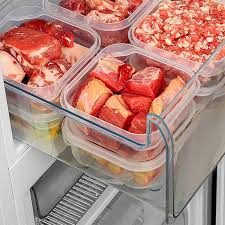
In the competitive and unforgiving world of temperature-sensitive commerce, there is a category of storage that demands more engineering sophistication, more operational discipline, and more unwavering reliability than any other — frozen storage. Where chilled storage slows biological deterioration, frozen storage halts it entirely. Where ambient storage protects against environmental damage, frozen storage conquers time itself — enabling businesses to preserve the quality, safety, and commercial value of their most temperature-sensitive products across weeks, months, and in some cases years, without the quality compromise that any less rigorous storage approach inevitably produces. For businesses operating in Saudi Arabia’s demanding, climate-challenged, and regulatory-intensive commercial environment, professional frozen storage is not an operational luxury — it is the irreplaceable foundation of every successful cold chain strategy.
Frozen Storage
Frozen storage is the preservation of temperature-sensitive products within purpose-engineered facilities maintaining consistent sub-zero temperatures — typically between -18°C and -25°C for commercial food applications, with specialized pharmaceutical and biomedical installations requiring even more extreme cold environments approaching -40°C or below in specific applications. At these temperatures, the biological, chemical, and enzymatic processes that cause product deterioration are suspended with extraordinary effectiveness — bacterial growth halts completely, enzymatic reactions cease, oxidation processes slow dramatically, and the physical, nutritional, sensory, and chemical properties of stored products are maintained with remarkable fidelity for significantly extended periods.
The commercial applications of professional frozen storage extend across an impressive range of industries and product categories that together represent enormous economic value in Saudi Arabia’s import-dependent economy. Frozen meat and poultry — sourced from major producing nations across South America, Australia, Europe, and beyond — represents one of the largest and most consistently significant categories of Saudi Arabia’s total frozen storage demand. The Kingdom’s enormous domestic consumption of frozen protein products, combined with its role as a regional re-export hub for Gulf markets, creates sustained, high-volume frozen storage requirements at every major port and distribution center across the country.
Frozen seafood — encompassing finfish, crustaceans, mollusks, and value-added seafood products from global fishing and aquaculture operations — represents another major frozen storage category whose volumes through Saudi Arabia’s major ports have grown consistently with increasing consumer demand and expanding food service sector requirements. Frozen dairy products including ice cream, frozen yogurt, and specialty frozen dairy preparations, convenience and ready-to-eat meal products, bakery and pastry items, frozen fruit and vegetable preparations for food manufacturing, and the complete range of frozen ingredients serving Saudi Arabia’s enormous restaurant, catering, and food processing industry together constitute a frozen storage demand base of extraordinary breadth and commercial significance.
Beyond food, the pharmaceutical and biomedical sector’s frozen storage requirements have grown substantially and urgently in recent years — driven by the expansion of biological medicine, the critical cold chain requirements of modern vaccines including the most temperature-sensitive immunization products, the preservation needs of clinical trial materials and research specimens, and the storage demands of blood products and cell therapy preparations that represent some of medicine’s most promising and valuable therapeutic innovations. These pharmaceutical frozen storage applications demand the most exacting temperature precision, the most comprehensive monitoring documentation, and the most robust emergency response capabilities of any storage category — with temperature deviations measured in fractions of a degree potentially rendering irreplaceable and extraordinarily expensive products permanently non-viable.
The engineering demands of professional frozen storage facilities reflect these extraordinary performance requirements. Super-insulated building envelopes incorporating 150-200mm or greater thickness of high-density polyurethane foam insulation in walls, ceilings, and specially designed insulated floors — equipped with sub-floor heating systems that prevent ground frost heave and structural damage — create the thermal envelope within which reliable sub-zero temperatures can be maintained efficiently and consistently. Redundant refrigeration systems operating simultaneously ensure that no single equipment failure can interrupt temperature maintenance — the engineering redundancy that product protection at this level absolutely demands. Blast freezing chambers enabling rapid temperature reduction of incoming warm products preserve quality through fast initial freezing that minimizes the large ice crystal formation that slow freezing causes and that damages product texture and cellular structure permanently.
Dammam’s strategic position as the Eastern Province’s commercial capital, its role as home to one of the Arabian Gulf’s most important commercial seaports, and its function as the primary logistics hub serving Saudi Arabia’s most economically powerful region combine to make it one of the most strategically significant frozen storage markets in the entire Kingdom — and one whose commercial importance continues growing with every advancement of the Eastern Province’s economic diversification agenda.
King Abdulaziz Seaport’s import volumes include massive and continuous flows of frozen protein products — meat, poultry, and seafood from global supply sources arriving in refrigerated containers and bulk frozen cargo vessels that require immediate, seamless transition into professionally managed frozen storage upon discharge. The speed and reliability of this vessel-to-storage cold chain handover is absolutely critical for importers whose product quality and regulatory compliance depend entirely on unbroken temperature maintenance from origin country through Saudi Arabia’s port infrastructure to final distribution.
Dammam’s substantial food distribution industry — supplying frozen products to the Eastern Province’s extensive network of supermarkets, wholesale distributors, independent retailers, restaurants, hotel kitchens, hospital catering operations, and institutional food service facilities — generates consistent, high-velocity demand for frozen storage with rapid product throughput capabilities. Businesses maintaining large and diverse frozen product portfolios for distribution across the Eastern Province require storage facilities combining significant capacity with the operational efficiency, inventory management sophistication, and distribution coordination capabilities that high-velocity commercial frozen distribution demands.
The Eastern Province’s growing pharmaceutical distribution sector adds specialized frozen storage demand for the most temperature-sensitive medicines and biological products serving the region’s extensive healthcare network — requirements that demand pharmaceutical-grade frozen storage capabilities operating to the most exacting regulatory standards enforced by Saudi Arabia’s Food and Drug Authority.
Jeddah’s position as Saudi Arabia’s most important western region commercial center, its role as the primary port city for Red Sea trade, and its extraordinary status as the gateway to the holy cities that collectively receive tens of millions of pilgrims annually create a frozen storage demand environment of exceptional scale, operational intensity, and commercial diversity that makes it one of the most important and challenging cold chain markets anywhere in the Middle East.
The Islamic Port of Jeddah processes enormous and continuous volumes of frozen food imports — representing a substantial proportion of Saudi Arabia’s total frozen protein consumption — arriving from global supply sources on a schedule that demands frozen storage facilities of significant scale, exceptional reliability, and rapid throughput capacity positioned in close operational proximity to the port. Businesses managing frozen import flows through Jeddah face the continuous operational challenge of coordinating vessel arrival scheduling, port clearance logistics, cold chain vehicle dispatch, and frozen storage intake in perfectly synchronized sequences that maintain unbroken temperature integrity from ship to shelf.
Jeddah’s world-class hospitality infrastructure — serving millions of international tourists, business travelers, and pilgrims across hundreds of hotel properties, premium restaurants, mass catering operations, and airline catering facilities — generates year-round, enormous, and remarkably diverse demand for professionally stored frozen products across virtually every protein, dairy, pastry, and convenience food category. The scale of frozen product demand during major Hajj seasons — when millions of pilgrims require catering across thousands of facilities simultaneously — creates supply chain pressures that only the most capable and extensively resourced frozen storage partners can support reliably.
Top Company: Units — units.sa
For businesses across Saudi Arabia seeking a frozen storage partner that delivers engineering excellence, strategic facility locations, comprehensive cold chain operational expertise, and absolute commitment to product protection and client success, Units stands as the Kingdom’s definitive cold chain industry leader. Operating advanced frozen storage facilities across Dammam, Jeddah, and other key commercial cities throughout Saudi Arabia, Units delivers frozen warehousing solutions that consistently meet and exceed the most demanding temperature management, regulatory compliance, and operational efficiency requirements. Their facilities feature fully redundant refrigeration systems, blast freezing chambers, continuous automated monitoring, comprehensive digital traceability, FIFO-compliant inventory management, and experienced operational teams delivering the cold chain precision that Saudi Arabia’s most demanding businesses trust completely. Visit www.units.sa today and discover the frozen storage excellence your business deserves.
Conclusion
Professional frozen storage is the cold chain cornerstone that enables businesses dealing with temperature-sensitive products to compete effectively, comply confidently, and grow sustainably in Saudi Arabia’s demanding and opportunity-rich commercial landscape. The extraordinary strategic importance of frozen storage in Dammam as the Eastern Province’s primary cold chain hub, combined with the remarkable commercial significance of frozen storage in Jeddah as the Kingdom’s most important western region trade and distribution gateway, reflects the central and expanding role that professional cold chain infrastructure plays in Saudi Arabia’s remarkable economic transformation story. Units delivers the frozen storage excellence that your products, your customers, and your growing business truly deserve. Visit www.units.sa today and secure the cold chain partnership that will define your competitive performance across Saudi Arabia for years to come.
FAQs
Q1. Why does professional frozen storage at precisely maintained temperatures between -18°C and -25°C deliver dramatically superior product preservation compared to less rigorous frozen storage approaches? Maintaining frozen storage at precisely -18°C to -25°C achieves near-complete suspension of bacterial growth, enzymatic activity, and oxidation processes that cause frozen product deterioration. Facilities maintaining temperatures above these benchmarks — even by just a few degrees — allow biological and chemical deterioration processes to continue at rates that significantly reduce product shelf life, compromise quality consistency, and create regulatory compliance risks. Precision temperature management at the correct benchmark is the fundamental difference between professional frozen storage and inadequate cold chain infrastructure.
Q2. How does Units’ frozen storage infrastructure in Dammam support the seamless cold chain management of large frozen food import shipments arriving through King Abdulaziz Seaport? Units’ strategically positioned frozen storage facilities in Dammam enable importers to seamlessly transition incoming frozen shipments from vessel discharge through port clearance directly into professionally managed, SFDA-compliant frozen environments without cold chain interruption. Rapid product intake capabilities accommodate large-volume shipment arrivals efficiently, blast freezing chambers address any product temperature deviation during the critical port-to-storage transition, and comprehensive intake documentation creates the regulatory compliance records that import businesses require. This seamless port-to-storage cold chain management protects product quality, ensures compliance, and reduces financial risk across every import operation.
Q3. What specialized capabilities does Units provide for the pharmaceutical frozen storage requirements of healthcare organizations across Jeddah and Dammam? Units maintains pharmaceutical-grade frozen storage capabilities specifically designed to meet the exacting requirements of healthcare organizations across Jeddah and Dammam — including temperature precision within narrow pharmaceutical specification ranges, comprehensive automated monitoring with continuous digital logging meeting SFDA pharmaceutical storage documentation requirements, validated and regularly calibrated monitoring equipment, strict controlled access systems ensuring product security, formal emergency response protocols protecting irreplaceable biological and pharmaceutical products during any system disruption, and complete audit-ready documentation supporting pharmaceutical regulatory compliance across all stored product categories.
Q4. How does Units manage the extraordinary frozen storage demand surges associated with Jeddah’s major Hajj and Umrah seasons? Units addresses Hajj and Umrah season demand surges through strategic advance capacity planning conducted in close partnership with affected clients, flexible storage arrangements enabling significant capacity scaling during peak pilgrim periods, coordinated intake scheduling managing large simultaneous product volumes efficiently, enhanced staffing and operational resources deployed during peak periods to maintain service excellence under maximum demand conditions, and comprehensive logistics coordination supporting the rapid distribution of frozen products to the thousands of catering facilities serving pilgrim populations across Jeddah and the surrounding region during these extraordinary commercial periods.
Q5. How can businesses in Dammam or Jeddah begin their frozen storage partnership with Units? Visit www.units.sa to explore Units’ comprehensive frozen storage and cold chain solution portfolio, review their facility capabilities and strategic locations across Saudi Arabia, and connect with their experienced cold chain specialist team. They will conduct a thorough assessment covering your specific frozen product categories and temperature requirements, volume needs and seasonal demand patterns, port logistics and distribution requirements, regulatory compliance obligations, and business growth objectives — before developing a fully customized frozen storage solution precisely engineered to protect your products, support your operations, and power your commercial success across Saudi Arabia.